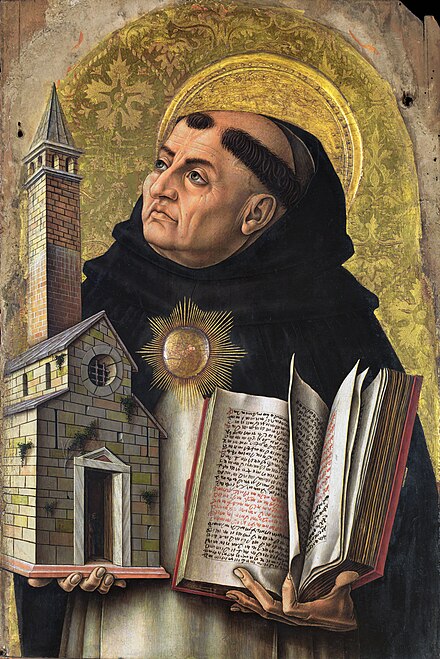
Roots in Italy
Born into a noble family in a fortified castle at Roccasecca, Thomas was sent young to Monte Cassino and later to Naples, where Aristotle’s books found him. He joined the Dominicans despite fierce opposition at home — and that decision set the pattern for everything after.
Master of Theology
By 1256 he was teaching in Paris. There he worked out the “Five Ways,” simple, careful arguments for God’s existence that still show up in classrooms and conversations centuries later. He wrote for missionaries and scholars alike — including the Summa Contra Gentiles and the great unfinished Summa Theologica.
In 1567, Pope Pius V named him a Doctor of the Church. The title fit: Thomas Aquinas had already become a standard the Church could lean on when the questions got hard.
Guardian of reason and faith
He did not treat philosophy as a rival to the Gospel. He treated it as a tool. Against fashionable errors of his age, he argued that revelation and reason, rightly used, point the same direction — toward the God who is Truth.
Enduring example
Thomas Aquinas died on March 7, 1274, at Fossanova Abbey, on his way to the Council of Lyon. The Church remembers him as the Angelic Doctor — not because he was coldly clever, but because clarity and holiness can live in the same soul.
His feast day is January 28. If you want a patron for study, for hard questions asked without cynicism, start with him.
“To one who has faith, no explanation is necessary. To one without faith, no explanation is possible.”